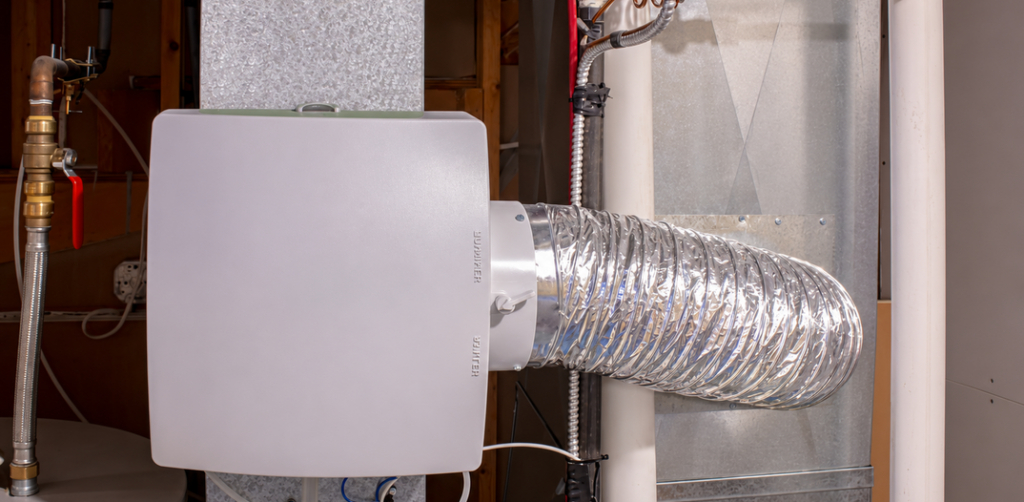
Dry air can become hard to ignore once an Ontario winter settles in. If low winter humidity readings keep showing up on your hygrometer, you may notice dry skin, a dry throat, or rooms that simply feel less comfortable.
A whole-home humidifier can add moisture back into dry indoor air. But it should not be the automatic answer. Before adding more humidity, it helps to confirm that your home is actually too dry and that you are not dealing with air leaks, insulation problems, or excess moisture somewhere else.
What Is a Comfortable Humidity Level in Winter?
Health Canada recommends keeping indoor relative humidity between 30% and 50%. But that does not mean every home needs to stay at the same number all winter. As the weather gets colder, you may need to adjust the level based on what is happening inside your home.
There is no single ideal home humidity in winter for every house. Natural Resources Canada notes that condensation becomes more likely as outdoor temperatures fall or indoor humidity rises. If moisture starts collecting on windows or other cold surfaces, your indoor humidity may be too high for the conditions.
A hygrometer gives you a useful number, but it should not be the only thing you check. Pay attention to your windows, cold surfaces, and any signs of ongoing condensation. Together, those clues give you a better picture of whether your home needs more moisture or less.
Why Does Indoor Air Get So Dry During an Ontario Winter?
Your furnace does not simply “pull” moisture out of the air. The bigger issue is what happens when cold outdoor air enters the home and then gets heated.
Cold air holds much less water vapour than warm air. Once that outdoor air comes inside and warms up, its relative humidity drops. Natural Resources Canada explains that poorly air-sealed homes can keep drawing in colder, drier outside air while warm, moist indoor air escapes through openings higher in the home.
This is why indoor winter humidity can fall as the heating season continues. A drafty home may feel especially dry because fresh cold air keeps entering and needs to be heated again.
How Can You Tell if Your Home Is Actually Too Dry?
Start by measuring it.
A small hygrometer can show the relative humidity in the room. Instead of reacting to one reading, check it at different times over several days. If possible, take readings in more than one part of the home.
A few days of winter humidity in-home readings can tell you much more than dry skin or static electricity alone. Health Canada also recommends measuring indoor humidity with a hygrometer rather than guessing whether the air is too dry.
Look at the pattern. Is the whole home consistently dry? Is one floor much different from another? Does the reading drop during very cold or windy weather? Those details can help you decide what needs attention.
When Can a Whole-Home Humidifier Help?
A whole-home humidifier adds moisture to air that has become too dry and sends that added moisture through the home’s ductwork. Unlike a portable humidifier that treats one room, it can help manage low humidity across much of the house. Carrier Canada explains how furnace-mounted humidifiers work with a home’s heating system.
Using a humidifier in winter may make sense when humidity stays low in several rooms, dry-air discomfort continues through the heating season, or you would otherwise need portable humidifiers in different parts of the home.
A whole-home humidifier for furnace use also needs to be compatible with your HVAC system. An HVAC professional can confirm whether your system can support one and which type is suitable.
If only one or two rooms feel dry, or the problem comes with drafts and uneven temperatures, it is worth looking for another cause before adding moisture throughout the whole house.
Can a Whole-Home Humidifier Help Reduce Heating Costs?
Yes, it may help indirectly. If proper humidity makes your home feel warmer and more comfortable, you may be able to lower the thermostat a little and still feel comfortable.
Natural Resources Canada notes that adequate humidity can improve how warm indoor air feels. Any savings would come from using less heat, not from the humidifier itself.
A whole-home humidifier also uses water, and some types use electricity. So it is best to think of lower heating use as a possible side benefit, not a guaranteed saving.
Winter Humidity in House: When Is a Humidifier the Right Fix?
Once you know the home is actually dry, the next question is whether adding more moisture will solve the problem.
A few checks can help:
- Is the whole house dry? If humidity stays low across several rooms, a whole-home humidifier becomes more relevant.
- Is the problem limited to certain rooms? Dryness that only shows up in one area, especially with drafts or uneven temperatures, may point to another comfort issue.
- Are you already seeing signs of moisture? Window condensation, attic frost, damp insulation, or musty areas are reasons to investigate before adding more humidity.
A humidifier makes the most sense when low humidity is affecting much of the home, and there are no signs that moisture is already becoming a problem.
If the dryness comes with drafts, cold rooms, or attic concerns, it is worth looking at those issues too. The right fix depends on what is actually making the home uncomfortable.
When Should You Avoid Adding More Humidity?
If your windows are already collecting condensation, or you notice attic frost, damp insulation, or musty areas, adding more humidity may make the problem worse.
Cold snaps can make these signs more noticeable, so deal with the moisture issue first before turning up the humidifier.
Could Insulation or the Attic Be Part of the Problem?
If dry air comes with cold rooms, drafts, or uneven temperatures, the issue may not be humidity alone. This is especially worth checking when upstairs rooms are harder to keep comfortable.
Look for signs such as attic frost, damp areas, or insulation that appears thin or uneven. A humidifier can add moisture to dry air, but it cannot fix an insulation problem. If moisture is already collecting in the attic, adding more humidity may make things worse.
Celluloseman’s insulation installation services can help with broader insulation concerns, while its attic insulation services focus on the space above the living area. Humidifier selection and installation should still be handled by an HVAC professional.
Need Help With an Insulation or Attic Concern?
If your humidity readings are low but your home also has cold rooms, drafts, or attic concerns, the next step may be to look beyond the humidifier.
You can contact Celluloseman to discuss the insulation conditions you are noticing in your home. You can also learn more about Celluloseman’s insulation and attic services on the Celluloseman home page.