Most Ontario homes need enough attic insulation to limit heat loss during winter and reduce unwanted heat gain during summer. For many conventional vented attics, R-50 to R-60 is a useful range to consider when planning an upgrade, although the appropriate level depends on the home’s construction, location and existing conditions. At Celluloseman Inc., we provide professional attic insulation services for homeowners in Toronto, Mississauga, Burlington and surrounding Ontario communities.
However, determining how much attic insulation a home needs involves more than choosing an R-value. Existing insulation may be damaged, air leaks may affect thermal performance, or poor ventilation may contribute to moisture problems.
Our team assesses these conditions before recommending insulation improvements. When necessary, we remove unsuitable materials, address underlying problems and prepare the attic for proper reinsulation.
How Much Attic Insulation Is Recommended for Ontario Homes?
The amount of attic insulation needed depends on the required thermal resistance, the type of insulation and the building’s existing structure.
For many Ontario homeowners upgrading an older attic, R-50 to R-60 provides a practical range for discussion. However, this is not a universal Ontario Building Code requirement.
Different requirements can apply depending on whether the work involves an existing home, an addition or new construction. The applicable code provisions and energy-efficiency compliance approach must be considered.
Understanding Attic Insulation R-Value
R-value measures how effectively an insulation material resists heat flow. A higher R-value means greater resistance to heat transfer under the conditions used to rate the material.
Common insulation levels include:
- R-20: A relatively low insulation level for a conventional attic in Ontario’s climate.
- R-30: Greater thermal resistance, but still below common targets for many attic upgrades.
- R-40: A substantial insulation level that may be found in previously upgraded homes.
- R-50: A useful benchmark when assessing many existing attics.
- R-60: A common high-performance target for conventional attic insulation upgrades.
These values provide general context rather than a fixed standard for every property.
Why Ontario Homes May Need Different Insulation Levels
Ontario includes regions with different winter temperatures, building styles and construction requirements.
Homes in Toronto, Mississauga and Burlington may have different attic conditions from properties in northern Ontario.
The appropriate insulation level also depends on:
- Existing insulation thickness and condition
- Available space within the attic
- Ceiling and roof construction
- Air leakage through the attic floor
- Ventilation and moisture conditions
- Applicable building requirements
Our attic insulation contractors consider these factors before recommending additional insulation or replacement.
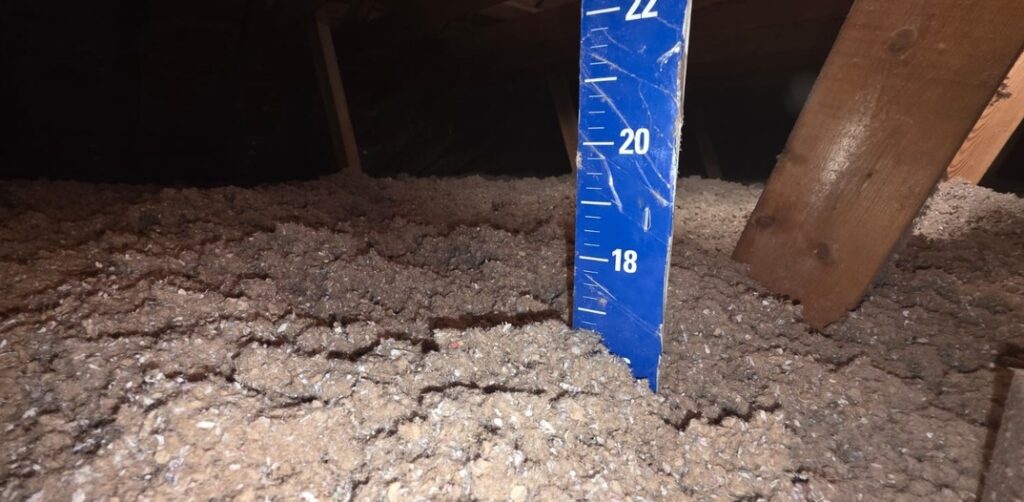
How Thick Should Attic Insulation Be?
Insulation thickness depends on the material’s thermal resistance per inch and its installed condition.
Two materials may provide similar R-values while requiring different depths.
For example, loose-fill cellulose insulation commonly provides approximately R-3.2 to R-3.8 per inch, depending on the product and installation specifications.
Using R-3.5 per inch as an illustration:
| Target R-Value | Approximate Cellulose Depth |
| R-30 | 8.6 inches |
| R-40 | 11.4 inches |
| R-50 | 14.3 inches |
| R-60 | 17.1 inches |
These are approximate calculations, not installation specifications. Actual required depths depend on the manufacturer’s coverage chart, installed density and settlement allowance.
Why Insulation Depth Alone Is Not Enough
A thick layer of insulation does not automatically mean an attic performs well.
If insulation is unevenly distributed, compressed or missing around difficult-to-access areas, heat can pass through those sections more easily.
Likewise, gaps around plumbing penetrations, wiring openings and attic access points may allow conditioned indoor air to enter the attic.
Our team evaluates insulation coverage and potential air leakage rather than relying on thickness alone.
How to Tell Whether Your Attic Needs More Insulation
Many homeowners first notice signs of inadequate attic insulation through changes in indoor comfort.
Common indicators include:
- Bedrooms that remain colder during winter
- Uneven temperatures between floors
- Drafts near ceilings or upper-floor rooms
- Heating and cooling systems operating more frequently
- Visible gaps or uneven insulation coverage
- Insulation that appears compressed, damp or deteriorated
- Recurring ice dams that may indicate heat-loss or ventilation problems
These symptoms can have several causes. An attic assessment helps determine whether insulation is contributing to the problem.
Assessing Existing Attic Insulation
A professional assessment should identify the insulation material, approximate depth, coverage and overall condition.
We also look for evidence of moisture, ventilation restrictions and openings that may allow air to move between the living space and attic.
Homeowners should not assume that existing insulation can safely be disturbed, particularly when its composition is unknown.
Older attic materials may require identification or testing before removal or installation work begins.
Why Attic Insulation Removal May Be Necessary Before Reinsulation
Adding insulation over existing material is sometimes appropriate. However, damaged, contaminated or unsuitable insulation may need to be removed first.
This distinction matters because new insulation cannot correct underlying moisture damage, contamination or structural problems.
According to Natural Resources Canada’s guidance on roofs and attics, homeowners should assess existing insulation for moisture, deterioration and contamination before proceeding with attic improvements.
At Celluloseman Inc., we use specialized, high-powered vacuum removal equipment designed to remove old insulation and contaminants from attic spaces. Our controlled removal process helps us access areas that need further attention before we begin air sealing, addressing ventilation problems and installing new insulation.
Mould and Moisture-Damaged Insulation
Moisture may enter an attic through roof leaks, plumbing problems, air leakage or ventilation deficiencies.
When insulation becomes wet, it may lose some of its effectiveness. Persistent moisture can also contribute to mould growth on susceptible building materials.
Simply covering the affected insulation with another layer does not resolve the cause.
Our team assesses the source of the problem and determines whether insulation removal and appropriate remediation are needed before reinsulation.
Vermiculite and Potential Asbestos Contamination
Some older Ontario homes contain vermiculite insulation. Certain vermiculite products were contaminated with asbestos, which can create serious health risks when fibres become airborne.
Vermiculite should not be disturbed, vacuumed with ordinary household equipment or covered without appropriate professional assessment.
Our technicians have specialized training in asbestos-related insulation removal, including vermiculite projects.
Where asbestos-containing materials are identified or reasonably suspected, the work must follow applicable Ontario requirements, including appropriate containment, worker protection and waste-handling procedures.
Professional assessment helps determine the safest course of action.
Why Air Sealing Matters Before Installing Attic Insulation
Insulation reduces heat transfer, while air sealing helps prevent unwanted air movement through the building envelope.
Both contribute to attic performance.
Even a well-insulated attic may experience problems when warm, moisture-laden indoor air enters through ceiling openings.
Common Attic Air Leakage Locations
Potential leakage points include:
- Openings around electrical and plumbing penetrations
- Gaps around attic access hatches
- Wall-to-ceiling connections
- Openings around mechanical ducts
- Unsealed service penetrations
These locations require assessment before new insulation covers them.
Our professionals address accessible air leakage concerns using appropriate materials and methods for the surrounding construction.
This work helps reduce unnecessary heat loss and lowers the likelihood of indoor moisture reaching colder attic surfaces.
How Attic Ventilation Affects Insulation Performance
Attic ventilation helps manage moisture and roof-space conditions in conventional vented attic assemblies.
However, ventilation and insulation serve different purposes.
Insulation reduces heat transfer through the ceiling, while ventilation allows air movement through designated roof-space openings.
Problems Caused by Blocked Attic Ventilation
Insulation installed too close to soffit openings may restrict airflow.
This can contribute to moisture accumulation, particularly when warm indoor air also leaks into the attic.
Depending on the roof design, an effective installation may require ventilation baffles and adequate clearance near the eaves.
Our team assesses existing venting conditions before placing additional insulation.
Not every roof assembly uses the same ventilation approach. Unvented roof systems require different insulation and moisture-control considerations.
What Happens During a Professional Attic Insulation Upgrade?
An attic insulation upgrade should follow a planned sequence that addresses existing conditions before new materials are installed.
At Celluloseman Inc., our approach focuses on the attic as a complete system, not simply the amount of insulation added.
Step 1: Inspect the Attic
We begin by reviewing existing insulation, access conditions and visible signs of moisture or deterioration.
We also assess whether the attic requires removal, remediation or preparation before installation.
Step 2: Remove Unsuitable Insulation
When removal is required, our team uses specialized equipment and appropriate containment practices for the material involved.
Controlled removal helps provide access to previously covered areas where hidden problems may need attention.
Step 3: Address Existing Attic Problems
Once the space is accessible, we can evaluate air leakage, ventilation concerns and other conditions affecting performance.
Any required remediation or repairs should be completed before reinsulation.
Step 4: Install Appropriate Insulation
We select the insulation approach based on the attic design and agreed project requirements.
Installation involves achieving the specified coverage and depth while protecting ventilation openings and maintaining required clearances around heat-producing equipment.
Step 5: Review the Completed Work
After installation, we review the work against the project scope, including insulation coverage and accessible installation details.
Our attic insulation service is supported by a one-year work guarantee, subject to its applicable terms.
Choosing the Right Attic Insulation Contractor in Ontario
Not every attic project involves a straightforward insulation top-up.
Some homes require old insulation removal, moisture investigation, mould remediation, asbestos-related work or ventilation corrections before installation can begin.
For these properties, choosing an attic insulation contractor with experience in specialized removal and attic restoration is particularly important.
Homeowners should look for:
- Experience with existing and older attic spaces
- Appropriate training for hazardous materials
- Specialized insulation removal equipment
- Controlled dust and debris handling
- Knowledge of air sealing and ventilation
- Clear recommendations based on attic conditions
- Written project scopes and applicable warranty information
A contractor who evaluates the entire attic can help homeowners make informed decisions about which work is necessary.
This approach is also valuable for general contractors and restoration companies coordinating larger renovation or remediation projects.
Improve Your Ontario Home’s Attic Insulation With Celluloseman Inc.
The right amount of attic insulation depends on more than achieving a particular R-value. Existing materials, air leakage, ventilation and moisture conditions all influence how an attic should be upgraded.
At Celluloseman Inc., we provide attic insulation, specialized insulation removal and related attic improvement services for homeowners in Toronto, Mississauga, Burlington and surrounding Ontario communities. Our team focuses on identifying and addressing existing concerns before completing the insulation work.
If you are planning an attic insulation upgrade or are concerned about the condition of your existing insulation, contact us to arrange an assessment and discuss the appropriate next steps.