For countless homeowners across York Region, the attic remains the most neglected frontier of domestic maintenance. It serves as a catch-all for forgotten decorations and obsolete belongings, yet simultaneously performs one of the most critical functions in your home’s thermal envelope. The gradual accumulation of debris, rodent intrusion, and moisture damage slowly erodes the performance of your existing insulation, leading to escalating heating bills, uncomfortable temperature fluctuations, and hidden structural decay. This is precisely why engaging professional insulation contractors in Markham has become an essential component of responsible home stewardship.

At Celluloseman, we have observed that the most significant long-term savings do not originate from purchasing the cheapest insulation product available at a big-box retailer. They emerge from a comprehensive attic reset that addresses every variable affecting your home’s thermal performance. Without a methodical approach to removing contaminated materials, sealing air leaks, and installing the correct depth of high-quality cellulose insulation, your home continues to bleed energy dollars into the frigid Canadian winter sky.

The Hidden Costs of an Unmaintained Attic

The Canadian climate presents unique challenges for residential insulation systems. Markham homeowners contend with winter temperatures that routinely plummet below minus twenty degrees Celsius and summer humidity that can transform an unventilated attic into a sweltering heat trap. According to Natural Resources Canada’s energy efficiency guidelines, inadequate attic insulation represents one of the primary sources of residential heat loss in older homes. When your attic contains insufficient or degraded insulation, warm air from your living spaces escapes upward, carrying your hard-earned heating dollars straight through the roof.

The consequences of neglecting your attic extend far beyond monthly utility bills. Moisture accumulation leads to wood rot in rafters and sheathing. Ice dams form along your roofline when heat escaping through the attic melts snow, which then refreezes at the eaves, forcing water back underneath your shingles. Rodent infestations introduce droppings and nesting materials that create fire hazards and pose serious health risks to your family.

Why Professional Insulation Contractors in Markham Provide Superior Outcomes

Many homeowners mistakenly believe that adding batt insulation from a hardware store represents a cost-effective solution to their attic problems. This assumption overlooks several critical factors that professional insulation contractors in Markham address comprehensively.

Safety and Hazard Remediation

Older homes may contain fibreglass, mineral wool, or even vermiculite insulation that could contain asbestos fibres. Safe removal demands commercial-grade vacuum systems with HEPA filtration, full-body protective suits, and respiratory protection. Our trained crews at Celluloseman follow all Occupational Health and Safety Act protocols to ensure that no hazardous fibres enter your living spaces during the removal process.

Comprehensive Air Sealing

The spaces around plumbing stacks, electrical wiring, and heating ducts represent direct pathways for heat to escape your home. Standard batt insulation cannot seal these gaps effectively. Our team applies spray foam and caulking to every penetration, creating a truly continuous thermal barrier that prevents convective heat loss.

Superior Material Performance

Cellulose insulation outperforms fibreglass in several important respects. It provides superior resistance to airflow, better sound dampening characteristics, and significantly higher recycled content. When installed at the correct density, cellulose insulation settles to achieve the R-value required to meet Ontario Building Code standards for new residential construction.

insulation contractors markham

The Canadian Regulatory Framework

The legal and technical standards governing insulation installation in Canada exist to protect homeowners and ensure consistent quality outcomes. Under the Ontario Building Code and the National Energy Code for Buildings, all residential attics must achieve prescribed R-value minimums based on their construction date and heating system type. 

Professional insulation contractors in Markham understand the documentation requirements necessary for homeowners to access government incentive programs. The Ontario Home Energy Audit program, administered through licensed energy advisors, offers qualified homeowners rebates of up to five thousand dollars for approved insulation upgrades. To qualify for these rebates, the work must be performed by certified contractors using materials listed on the program’s eligible products registry. Attempting to perform this work independently disqualifies you from these significant financial incentives.

The Celluloseman Protocol for Attic Transformation

When you engage our insulation services, we activate a structured process designed for thoroughness without unnecessary disruption to your daily life.

Conclusion

Your home represents your most significant investment, and every Markham homeowner deserves an attic that performs to its full potential. Energy waste, uncomfortable indoor temperatures, and hidden structural deterioration are not inevitable outcomes of homeownership. They are correctable conditions that respond dramatically to a comprehensive professional approach. By engaging the expert insulation contractors in Markham, you eliminate the single most expensive variable in home energy management: inefficiency. 

Celluloseman brings Canadian homeowners the equipment, certifications, and technical expertise required to transform your attic from a neglected liability into a high-performance asset. Do not let another winter pass with heat escaping through your roofline. Contact us today to protect your comfort, your budget, and your investment.

Most homeowners don’t realize they’re paying to heat and cool parts of the house that were never meant to be heated or cooled.

They just don’t know where the energy is going.

Higher utility bills, longer furnace cycles, and rooms that never feel quite right often point to hidden energy loss rather than a problem with the heating or cooling equipment itself. After inspecting Ontario homes for years, one pattern keeps repeating itself. The biggest energy losses almost always happen in places homeowners never think to check. In this article, we’ll explain where hidden energy loss commonly occurs, what causes it, and how experienced insulation contractors help uncover problems before they become even more expensive.

The Hidden Energy Loss That’s Costing You Every Season

Hidden energy loss rarely starts with one obvious problem.

It builds quietly.

A little warmth escapes through the attic. A little more slips through small gaps around the home. None of it seems significant on its own, but over time those small losses force the heating and cooling system to work harder just to keep the house comfortable.

One thing we’ve learned after inspecting Ontario homes is that homeowners almost never call us because they think they’re losing energy. They call because the furnace seems to run forever. Because one room never feels as comfortable as the rest of the house. Because every winter costs a little more than the last.

The symptoms are easy to notice.

The real cause usually isn’t.

That’s what makes hidden energy loss so easy to overlook. You experience the effects every day while the source remains hidden behind walls, above ceilings, or in areas most people never have a reason to inspect.

Where We Most Often Find Hidden Energy Loss In Ontario Homes

Before we inspect a home, we usually have a good idea where we’ll end up looking.

After enough inspections, certain areas become impossible to ignore.

The places we most often investigate include:

One thing that still surprises homeowners is how often the room causing the complaint isn’t where we find the problem. We’ve inspected homes where a cold bedroom was linked to issues above the ceiling, while an uncomfortable main-floor room traced back to hidden air leakage elsewhere in the building.

That’s why guessing rarely works.

A home performs as one system, and hidden energy loss often starts somewhere homeowners never think to look.

Why More Insulation Isn’t Always The Smartest Solution

One of the conversations we have most often with homeowners starts with the same assumption.

“We probably just need more insulation.”

Sometimes they’re right.

Sometimes they’re not.

We’ve inspected homes with plenty of insulation on paper that still struggled to stay comfortable because uncontrolled air movement was doing most of the work. Until that problem was addressed, adding more insulation alone wouldn’t have delivered the results the homeowner expected.

No two Ontario homes lose energy in exactly the same way. Age, previous renovations, construction methods, and existing insulation all influence how the home performs today.

That’s why we don’t start by recommending products.

We start by understanding where the energy is escaping and why.

Once we know that, we can recommend a solution that actually fits the home instead of simply adding more insulation and hoping for the best.

What Trusted Ontario Insulation Contractors Look For Before Recommending A Solution

One of the biggest mistakes we could make is recommending a solution before understanding the problem.

We’ve learned that hidden energy loss doesn’t follow a checklist.

Before we climb into an attic or start looking behind access panels, we usually ask homeowners a few simple questions. Which room bothers you the most? Has the problem always been there? Did it get worse after a renovation? Those conversations often tell us where to start looking long before the inspection begins.

From there, we begin piecing the home together. We look at insulation levels, signs of settling, areas where air may be moving, attic conditions, and spaces that have been renovated over the years. Sometimes the answer is additional insulation. Sometimes it’s improving the air seal. Quite often, it’s a combination of both.

One thing experience has taught us is that the right recommendation isn’t always the biggest one.

It’s the one that solves the reason energy is escaping in the first place.

Hidden Energy Loss Usually Shows Up Long Before Homeowners Realize It

One thing we’ve noticed over the years is that homeowners rarely connect all the signs together.

Higher energy bills.

Longer furnace cycles.

A room that’s always colder than the rest of the house.

Most people treat these as separate problems. We tend to see them as pieces of the same puzzle.

When conditioned air escapes through hidden gaps or underperforming insulation, the home has to work harder to stay comfortable. That’s why hidden energy loss affects more than monthly utility costs. It changes how the entire house performs from season to season.

Natural Resources Canada also recognizes insulation as an important part of improving home energy performance by reducing heat loss and helping homes operate more efficiently throughout the year. It reinforces what we continue to see during insulation assessments across Ontario.

How To Know When It’s Time To Call An Insulation Contractor

There’s nothing unusual about trying the simple fixes first.

That’s exactly what we’d expect.

Most homeowners adjust the thermostat. They move a space heater into the cold room. They close one vent and open another, hoping something finally makes a difference.

Sometimes those changes help for a while.

The underlying problem usually stays exactly where it is.

If you’ve noticed any of the following, it’s probably time to stop guessing and start looking for answers:

One thing we’ve learned is that homes almost always leave clues. The challenge isn’t finding them.

It’s knowing which ones actually matter.

Conclusion

Hidden energy loss doesn’t have to become part of living in your home. The right assessment can uncover where energy is escaping, explain why it’s happening, and help you invest in solutions that actually make a difference. Instead of guessing, work with experienced insulation contractors who understand how Ontario homes perform and know where to look first.

About Celluloseman

For more than a decade, Celluloseman has helped homeowners across Ontario uncover hidden energy loss and improve the performance of their homes through practical, long-term insulation solutions. Every recommendation begins with understanding how your home works today, so the solution addresses the real problem rather than simply covering up the symptoms.

For countless homeowners across York Region, the attic remains the most neglected frontier of domestic maintenance. It serves as a catch-all for forgotten decorations and obsolete belongings, yet simultaneously performs one of the most critical functions in your home’s thermal envelope. The gradual accumulation of debris, rodent intrusion, and moisture damage slowly erodes the performance of your existing insulation, leading to escalating heating bills, uncomfortable temperature fluctuations, and hidden structural decay. This is precisely why engaging professional insulation contractors in Markham has become an essential component of responsible home stewardship.

At Celluloseman, we have observed that the most significant long-term savings do not originate from purchasing the cheapest insulation product available at a big-box retailer. They emerge from a comprehensive attic reset that addresses every variable affecting your home’s thermal performance. Without a methodical approach to removing contaminated materials, sealing air leaks, and installing the correct depth of high-quality cellulose insulation, your home continues to bleed energy dollars into the frigid Canadian winter sky.

The Hidden Costs of an Unmaintained Attic

The Canadian climate presents unique challenges for residential insulation systems. Markham homeowners contend with winter temperatures that routinely plummet below minus twenty degrees Celsius and summer humidity that can transform an unventilated attic into a sweltering heat trap. According to Natural Resources Canada’s energy efficiency guidelines, inadequate attic insulation represents one of the primary sources of residential heat loss in older homes. When your attic contains insufficient or degraded insulation, warm air from your living spaces escapes upward, carrying your hard-earned heating dollars straight through the roof.

The consequences of neglecting your attic extend far beyond monthly utility bills. Moisture accumulation leads to wood rot in rafters and sheathing. Ice dams form along your roofline when heat escaping through the attic melts snow, which then refreezes at the eaves, forcing water back underneath your shingles. Rodent infestations introduce droppings and nesting materials that create fire hazards and pose serious health risks to your family.

Why Professional Insulation Contractors in Markham Provide Superior Outcomes

Many homeowners mistakenly believe that adding batt insulation from a hardware store represents a cost-effective solution to their attic problems. This assumption overlooks several critical factors that professional insulation contractors in Markham address comprehensively.

Safety and Hazard Remediation

Older homes may contain fibreglass, mineral wool, or even vermiculite insulation that could contain asbestos fibres. Safe removal demands commercial-grade vacuum systems with HEPA filtration, full-body protective suits, and respiratory protection. Our trained crews at Celluloseman follow all Occupational Health and Safety Act protocols to ensure that no hazardous fibres enter your living spaces during the removal process.

Comprehensive Air Sealing

The spaces around plumbing stacks, electrical wiring, and heating ducts represent direct pathways for heat to escape your home. Standard batt insulation cannot seal these gaps effectively. Our team applies spray foam and caulking to every penetration, creating a truly continuous thermal barrier that prevents convective heat loss.

Superior Material Performance

Cellulose insulation outperforms fibreglass in several important respects. It provides superior resistance to airflow, better sound dampening characteristics, and significantly higher recycled content. When installed at the correct density, cellulose insulation settles to achieve the R-value required to meet Ontario Building Code standards for new residential construction.

insulation contractors markham

The Canadian Regulatory Framework

The legal and technical standards governing insulation installation in Canada exist to protect homeowners and ensure consistent quality outcomes. Under the Ontario Building Code and the National Energy Code for Buildings, all residential attics must achieve prescribed R-value minimums based on their construction date and heating system type. 

Professional insulation contractors in Markham understand the documentation requirements necessary for homeowners to access government incentive programs. The Ontario Home Energy Audit program, administered through licensed energy advisors, offers qualified homeowners rebates of up to five thousand dollars for approved insulation upgrades. To qualify for these rebates, the work must be performed by certified contractors using materials listed on the program’s eligible products registry. Attempting to perform this work independently disqualifies you from these significant financial incentives.

The Celluloseman Protocol for Attic Transformation

When you engage our insulation services, we activate a structured process designed for thoroughness without unnecessary disruption to your daily life.

Conclusion

Your home represents your most significant investment, and every Markham homeowner deserves an attic that performs to its full potential. Energy waste, uncomfortable indoor temperatures, and hidden structural deterioration are not inevitable outcomes of homeownership. They are correctable conditions that respond dramatically to a comprehensive professional approach. By engaging the expert insulation contractors in Markham, you eliminate the single most expensive variable in home energy management: inefficiency. 

Celluloseman brings Canadian homeowners the equipment, certifications, and technical expertise required to transform your attic from a neglected liability into a high-performance asset. Do not let another winter pass with heat escaping through your roofline. Contact us today to protect your comfort, your budget, and your investment.

Most homeowners don’t start thinking about home performance after opening an energy bill.

They start after saying, “This room never used to feel like this.”

One room never seems to reach the same temperature as the rest of the house. The heating and cooling system runs longer than it used to. Utility bills continue to rise even though nothing inside the home appears to have changed. After inspecting Ontario homes for years, we’ve learned these problems are often connected. In this article, we’ll share the contractor insights behind better home performance and explain how experienced insulation contractors identify problems homeowners often overlook. 

Better Home Performance Starts With Looking Beyond The Obvious

Better home performance decisions begin when you stop focusing only on the symptom and start looking for the cause.

That’s where many homeowners get stuck.

It’s natural to focus on the room that’s too warm, the air conditioner that never seems to stop running, or the utility bill that’s higher than expected. Those are the problems you can see. What we’ve learned over the years is that the real cause is often somewhere else entirely.

One uncomfortable room doesn’t always mean that room has the problem. An air conditioner that runs longer isn’t automatically failing. Small changes in how a home performs usually point to something happening behind the scenes.

The best decisions come from understanding why the problem exists before deciding how to fix it.

Why Experienced Insulation Contractors Look At The Whole Home First

Experienced insulation contractors don’t evaluate one room or one attic in isolation.

They evaluate how the entire home works together.

One conversation we have all the time starts with, “Can you just add more insulation?” Sometimes the answer is yes. Quite often, it isn’t. Before making any recommendation, we want to understand how insulation, air movement, construction details, and previous renovations influence one another.

One thing experience has taught us is that two homes with similar insulation levels can perform completely differently. We’ve inspected homes with nearly identical complaints that required entirely different solutions because the root cause wasn’t the same.

That’s why we don’t begin with products.

We begin by understanding how the home performs as a complete system.

The First Clues We Notice Before Making Any Recommendation

The first clues we notice rarely come from insulation itself.

They come from the way the home behaves every day.

Some of the signs we pay the closest attention to include:

We’ve learned not to treat any one of these signs as the answer. It’s when several of them begin appearing together that the bigger picture becomes much clearer.

Those patterns help us make better recommendations, and they help homeowners make better decisions about what their home actually needs.

Why The Right Recommendation Always Starts With The Right Assessment

The best insulation recommendation is the one that’s based on evidence, not assumptions.

That’s why every assessment matters.

Before recommending any solution, we want to understand how the home is performing today. We look at insulation levels, signs of air leakage, attic conditions, previous renovations, and other factors that influence comfort and efficiency. Sometimes the solution is additional insulation. Sometimes it’s improving the air seal. Often, it’s a combination of both.

One thing we’ve learned is that the first answer isn’t always the right one. Taking the time to understand the problem almost always leads to a better long-term outcome.

The Lessons Ontario Homes Continue To Teach Us

After inspecting homes across Ontario for years, one thing has become clear.

No two homes perform exactly the same.

Homes built around the same time, in the same neighbourhood, and with similar insulation can behave very differently. Previous renovations, construction methods, maintenance, and even small details hidden behind finished walls can all influence how a home performs today.

That’s why experience matters. Every assessment adds another lesson, making it easier to recognize patterns while avoiding assumptions.

Natural Resources Canada also recognizes that insulation and air sealing work together to improve a home’s energy efficiency and overall performance. It reinforces the whole-home approach we continue to use when helping Ontario homeowners make informed insulation decisions.

Make Better Home Performance Decisions With Confidence

Making the right decision starts with understanding your home before choosing a solution.

That’s where professional guidance makes the biggest difference.

If you’ve noticed comfort problems that keep coming back, rising utility bills, or heating and cooling equipment working harder than it should, don’t assume you already know the cause. A professional assessment helps replace guesswork with answers, giving you the confidence to invest in solutions that actually address the problem rather than simply covering up the symptoms.

The better you understand how your home performs today, the easier it becomes to make decisions that improve its comfort, efficiency, and long-term performance.

About Celluloseman

For more than a decade, Celluloseman has helped Ontario homeowners make confident insulation decisions by understanding how each home performs before recommending a solution. Our practical, whole-home approach helps improve comfort, efficiency, and long-term performance with recommendations tailored to your property’s needs.

If you’re ready to make better home performance decisions, contact Celluloseman to schedule a professional insulation assessment and discover what your home really needs.

Most homeowners don’t keep adjusting the thermostat because they enjoy it. They do it because they’re running out of ideas. The bedroom stays cold. The second floor feels stuffy. One room is comfortable while another never seems quite right. After a while, people stop looking for answers and start working around the problem. What many homeowners don’t realize is that persistent comfort issues often have very little to do with the thermostat itself.

In this article, we’ll explore some of the comfort problems experienced Ontario insulation contractors encounter and solve regularly in Ontario homes and what may be contributing to them. Many homeowners start researching insulation contractors when they’re trying to understand why the problem won’t go away.

Why Persistent Comfort Problems Refuse To Go Away

Most comfort problems don’t arrive overnight. They show up gradually. A room feels a little cooler each winter. The upstairs seems slightly warmer every summer. The furnace runs longer than it used to. None of these changes seem urgent on their own, so people adapt.

That’s one thing we notice repeatedly in Ontario homes. Homeowners are often very aware of the symptom but have spent years living with it before looking into the cause.

The challenge is that comfort problems rarely point directly to the source. A cold bedroom doesn’t automatically mean the bedroom itself is the problem. The same goes for drafty hallways, stuffy upper floors, and rooms that never seem to match the rest of the house.

That’s why some comfort issues persist for years. People focus on what they can feel while the actual cause remains hidden behind walls, above ceilings, or inside attic spaces.

The Frustrating Cold Room That Always Feels Different

Nearly every homeowner can point to one room. You know the one. It’s the bedroom that’s colder than the rest of the house during January. The office where people keep a space heater under the desk. The guest room nobody wants to sleep in when temperatures drop. One misconception we encounter regularly is that these rooms simply need more heat. Sometimes that’s true. More often, we find something else contributing to the problem.

Insulation can settle over time. Air can move through small gaps that homeowners never see. Renovations completed years ago may have changed how that area of the home performs. We’ve even inspected homes where the room causing the complaint wasn’t the source of the issue at all. That’s what makes comfort problems frustrating. The symptom feels obvious. The cause usually isn’t.

When Your Second Floor Feels Like A Completely Different House 

Ontario homeowners mention this problem all the time.The main floor feels fine. The second floor doesn’t. Summer tends to make the issue impossible to ignore. Bedrooms become warmer than the rest of the house. Air conditioning seems to run constantly. People lower the thermostat hoping the upstairs will finally catch up. Sometimes it does. Often it doesn’t.

One thing experienced insulation contractors learn quickly is that upper floors reveal weaknesses in a home’s overall performance. Heat naturally rises, which means attic conditions, insulation levels, and air movement often have a greater impact than homeowners realize. We’ve seen homeowners blame their air conditioner for years when the bigger issue was happening above the ceiling. The equipment keeps working harder. The comfort problem stays exactly where it was.

The Surprising Reason The Thermostat Isn’t Fixing The Problem 

When a room feels uncomfortable, the thermostat becomes the first suspect. That makes sense. It’s the one thing homeowners can actually control.

The problem is that adjusting the thermostat treats the symptom, not necessarily the cause. If insulation has settled, if air leakage exists, or if certain areas of the home aren’t performing the way they should, changing the temperature setting won’t solve the underlying issue.

We’ve seen homeowners spend years making small adjustments. Up a degree. Down a degree. Another space heater. Another fan. Eventually those workarounds become routine. What many people discover later is that the thermostat was never the real problem. It was simply reacting to conditions elsewhere in the home.

What Experienced Ontario Insulation Contractors Spot Right Away 

When we assess a home with comfort complaints, we don’t start by looking at the thermostat. We start by looking for patterns.

Where is the problem occurring? When does it happen? Has it become worse over time? Did it appear after a renovation? These questions often reveal more than homeowners expect.

One thing we’ve learned over the years is that the room causing the complaint is rarely the only area worth investigating. Comfort issues often involve multiple factors working together. Settled insulation, air leakage, attic conditions, and previous upgrades can all influence how a home feels day to day.

That’s why experienced insulation contractors focus on understanding the home’s overall performance rather than chasing a single symptom.

Why Small Comfort Problems Often Signal Bigger Performance Issues 

Many homeowners treat comfort problems as isolated annoyances. A cold room is just a cold room. A draft is just a draft. A hot second floor is simply part of summer. Sometimes that’s true. Often it isn’t.

Small comfort issues can reveal larger inefficiencies that affect the entire home. When heat escapes during winter or enters too easily during summer, heating and cooling systems work harder to maintain indoor temperatures. Over time, that can affect both comfort and energy consumption.

Natural Resources Canada highlights the important role insulation plays in reducing heat loss and improving overall home energy performance. When insulation and air sealing work together effectively, homes tend to stay more comfortable throughout the year while using energy more efficiently.

What makes these issues tricky is that homeowners usually experience the symptoms long before they understand the cause. They feel the discomfort first. The performance issue remains hidden.

When It’s Finally Time To Call Insulation Contractors 

Some homeowners wait until a major renovation. Others wait until energy bills become impossible to ignore. In our experience, most people wait longer than they need to.

By the time they reach out, they’ve often spent multiple seasons adjusting thermostats, moving space heaters from room to room, closing vents, opening vents, and trying different workarounds. The problem becomes part of everyday life.

A professional assessment may be worth considering if:

The sooner the underlying cause is identified, the sooner homeowners can stop guessing.

Conclusion

Persistent comfort problems often point to hidden issues like insulation gaps or air leaks. Identifying the cause is the first step toward improving comfort and home performance.

About Celluloseman

At Celluloseman, we’ve spent years helping homeowners across Ontario identify and solve insulation issues that affect comfort, efficiency, and day-to-day living. From insulation installation and removal to environmental assessment services, we focus on practical solutions tailored to each home’s unique needs.

If you’re dealing with a comfort problem that never seems to go away, contact Celluloseman to schedule an assessment and learn what may be contributing to the issue.

As Markham transitions from the lingering chill of spring into the humidity-laden days of summer, homeowners face a distinct performance challenge within their building envelopes. Unlike older housing stocks found in other parts of the Greater Toronto Area, Markham’s diverse architecture, ranging from sprawling detached homes in Cathedraltown to compact townhouses near Unionville, requires a sophisticated approach to thermal regulation. Implementing professional insulation services before the peak of summer preserves indoor comfort, significantly reduces mechanical strain on HVAC systems, and delays the costly degradation of building materials caused by moisture infiltration and thermal bridging.

How Inadequate Insulation Compromises Summer Comfort

During a typical Markham summer, outdoor temperatures frequently climb above thirty degrees Celsius, accompanied by high relative humidity. Without a continuous and adequately rated insulation layer, this external heat transfers into conditioned living spaces through conduction. Furthermore, when air leakage coincides with solar gain, attics and wall cavities become superheated reservoirs. Homeowners often misattribute this discomfort to failing air conditioning units, when in reality, the root cause is an underperforming thermal barrier.

professional insulation contractors in Markham

A professional assessment from trusted insulation contractors in Markham identifies three primary failure modes prevalent in local homes:

Each of these defects is reversible during a targeted retrofit. However, when left unaddressed, the compounded energy loss and moisture cycling lead to structural wood rot, peeling exterior paint from elevated humidity, and an unmistakable musty odour within wall cavities.

Critical Summer Insulation Protocols for Markham Homes

For residences within York Region, a professional insulation maintenance programme must address three specific vulnerabilities, attic thermal boundaries, basement air sealing, and ventilation compatibility. Celluloseman Inc. provides a systematic methodology that extends beyond superficial inspections.

Attic Insulation Depth and Density Verification

Cellulose insulation settles naturally over time, reducing its effective R-value per inch. A technician from Celluloseman Inc. will measure existing depth and calculate the settled density. The Government of Canada’s Natural Resources Canada department, through its Office of Energy Efficiency, recommends minimum attic insulation levels of R-50 to R-60 for southern Ontario’s mixed-humid climate zone. Upgrading to dense-packed cellulose creates a monolithic thermal blanket resistant to convective looping.

Air Sealing Before Insulation Addition

Blowing new insulation over a leaky attic floor is a futile exercise. Heated or cooled air bypasses insulation entirely through gaps around plumbing stacks, electrical penetrations, and attic hatches. Professional insulation contractors markham prioritise air sealing with acoustic sealant and expandable foam prior to any loose-fill application. This two-step process reduces air changes per hour by up to forty per cent.

Basement Rim Joist Encapsulation

The rim joist area, where the foundation meets the main floor framing, is a notorious thermal bypass. Uninsulated rim joists in Markham basements act as thermal fins, conducting exterior heat directly into the floor joist cavity. Celluloseman Inc. applies rigid foam board followed by a dense-packed cellulose blanket or spray foam to decouple this connection, stabilising first-floor temperatures immediately.

Energy Efficiency and Cost Avoidance

A poorly insulated and unsealed home forces air conditioning systems to operate nearly continuously to maintain setpoint temperatures. Attic floor surface temperatures in a neglected Markham home can exceed fifty degrees Celsius, increasing cooling energy consumption by an estimated twenty-five to thirty-five per cent.

Conversely, a home that has undergone a complete insulation retrofit offers predictable performance:

The Risks of Deferred Insulation Maintenance

Postponing a professional assessment until a visible symptom appears, such as ice dams in winter or stifling upper floors in summer, is financially imprudent. Waiting for mould growth or a ceiling stain often leads to secondary damage:

In extreme cases, prolonged thermal cycling and moisture infiltration void manufacturers’ warranties for roofing and window assemblies, as many require proof of adequate attic ventilation and stable indoor humidity levels as conditions of coverage.

Professional Implementation With Celluloseman Inc.

Markham homeowners require a contractor who understands both local building codes and the science of hygrothermal performance. Celluloseman Inc. provides comprehensive retrofit programmes that include blower door testing to quantify air leakage prior to and following installation. All work aligns with guidelines from Natural Resources Canada regarding energy efficiency and building envelope performance.

A standard summer insulation retrofit includes:

To ensure compliance with federal standards, all work follows the technical specifications outlined by the National Research Council of Canada’s Institute for Research in Construction. Celluloseman Inc. adheres to all building science guidelines and delivers documented results, including photographic records and post-retrofit energy modelling.

Conclusion

The summer heat and humidity in Markham test every residential building envelope. Proactive insulation retrofitting transforms that challenge into an opportunity to enhance energy efficiency, improve indoor air quality, and avoid catastrophic structural failures. Do not wait for soaring utility bills or persistent discomfort on the second floor. Contact us today to schedule a pre-summer insulation assessment and secure a thermal performance plan designed specifically for the climate of York Region.

Most insulation contractors can install insulation. The difference is knowing where problems actually come from and which solution makes sense for a particular home.

After years of working in Ontario homes, we’ve found that comfort and efficiency issues aren’t always caused by a simple lack of insulation. Sometimes the insulation has settled. Sometimes there are hidden gaps. In other cases, previous upgrades addressed one problem while leaving another untouched.

Homeowners searching for experienced insulation contractors are often surprised by how many factors can influence a home’s overall performance. 

These are some of the things experienced insulation contractors look for that homeowners often don’t see.

Understanding the Importance of Insulation in Ontario Homes

Ontario homeowners deal with hot summers, cold winters, and everything in between. Good insulation helps homes stay comfortable throughout these seasonal changes.

In many Ontario homes, the first sign of an insulation problem isn’t a high energy bill. It’s a room that family members gradually stop using because it’s never comfortable. We’ve heard countless homeowners describe the same guest room, office, or upstairs bedroom that always seems harder to heat or cool than the rest of the house. 
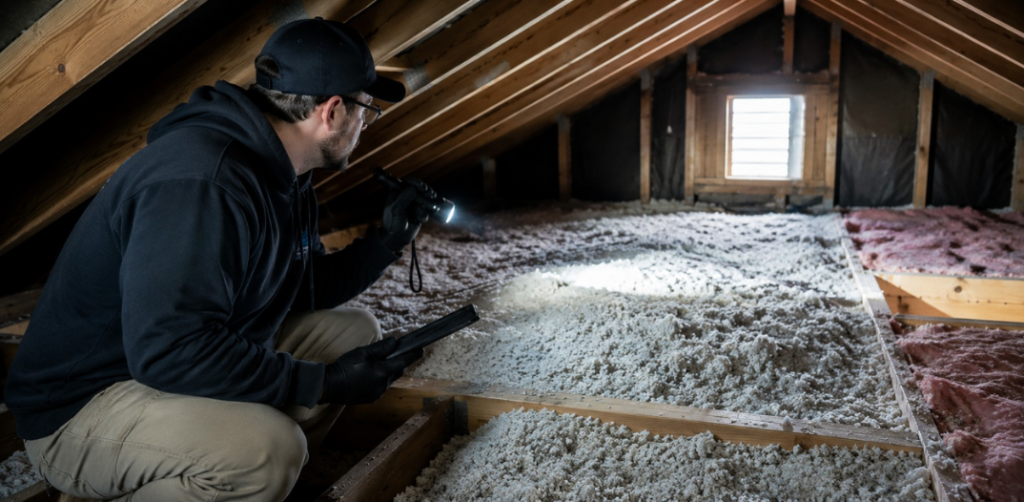
Insulation helps reduce these issues by slowing heat transfer and improving overall comfort throughout the home. It also plays an important role in reducing heat loss and supporting better energy performance, which is why Natural Resources Canada identifies insulation as a key component of an energy efficient home. 

Types of Insulation Materials We Commonly Recommend

Homeowners often ask which insulation product is best. The honest answer is that it depends on the home.

Blown In Cellulose

Often recommended for attics where additional coverage is needed. It works well for topping up insulation levels and filling irregular spaces.

Fiberglass

A common choice for attics, walls, and floors. Fiberglass remains a reliable option for many residential applications.

Spray Foam

Frequently used in areas where air leakage is a concern. Spray foam expands during installation and helps seal gaps that traditional insulation may miss.

One misconception we encounter regularly is the idea that one insulation product is automatically better than another. In reality, we’ve seen excellent results from cellulose, fiberglass, and spray foam when each is used in the right application. The product matters, but matching it to the home’s needs matters even more. 

What Experienced Insulation Contractors Notice During Home Assessments

The first thing we look for isn’t necessarily the insulation itself.

After years of inspections, we’ve noticed several recurring patterns:

Many homeowners are surprised to learn that the area causing the problem isn’t always the area where the symptoms appear. A cold room may be connected to an issue elsewhere in the home’s building envelope.

That’s why a proper assessment matters before recommendations are made.

Why No Two Ontario Homes Need the Same Insulation Solution

Two homes built on the same street can require completely different insulation strategies.

We’ve inspected neighbouring homes that appeared nearly identical from the outside but required completely different recommendations. One may have undergone multiple renovations over the years, while the other still reflects its original construction. What looks similar from the curb often tells only part of the story.

Older homes often have different challenges than newer homes. Renovations can also change how air moves through a structure. Experienced insulation contractors understand that every recommendation should be based on the home’s unique conditions.

Common Insulation Problems Homeowners Often Overlook

Many insulation problems aren’t obvious.

These are the issues we encounter most often during insulation assessments:

Homeowners often live with these conditions for years before realizing they’re affecting comfort and energy efficiency.

What Insulation Contractors Look At Beyond R Value

R value is important, but it isn’t the only factor that affects performance.

A home can have insulation with an appropriate R value and still experience comfort issues if installation quality is poor or air leakage remains unresolved.

When assessing a home, experienced insulation contractors also consider coverage consistency, air movement, ventilation, and the overall condition of existing insulation.

Looking at the complete picture often leads to better long term results.

Why Installation Quality Matters More Than Many People Realize

Even high quality insulation products can underperform if they’re installed incorrectly.

We’ve seen situations where insulation was compressed, unevenly distributed, or installed without addressing underlying issues first.

Good installation helps ensure insulation performs the way it was intended. It also helps homeowners get the full benefit of their investment rather than dealing with ongoing comfort concerns later.

Mistakes We Frequently See From Previous Insulation Work

Some of the most common mistakes we encounter include:

Most of these issues can be avoided with a thorough assessment and a tailored approach.

When It’s Time to Call Insulation Contractors

If certain rooms are consistently uncomfortable, energy bills seem unusually high, or your home simply doesn’t feel as efficient as it should, it may be worth having your insulation evaluated.

Homeowners don’t need to wait for a major problem before seeking advice. In many cases, identifying issues early can help prevent larger comfort and efficiency concerns down the road.

About Celluloseman

At Celluloseman, we’ve spent years working in homes across Southwestern Ontario, helping homeowners improve comfort, efficiency, and insulation performance. Our team specializes in insulation installation, insulation removal, and environmental assessment services tailored to the unique needs of each property.

Have questions about your home’s insulation? Contact Us today to schedule an assessment and discuss the right solution for your home.