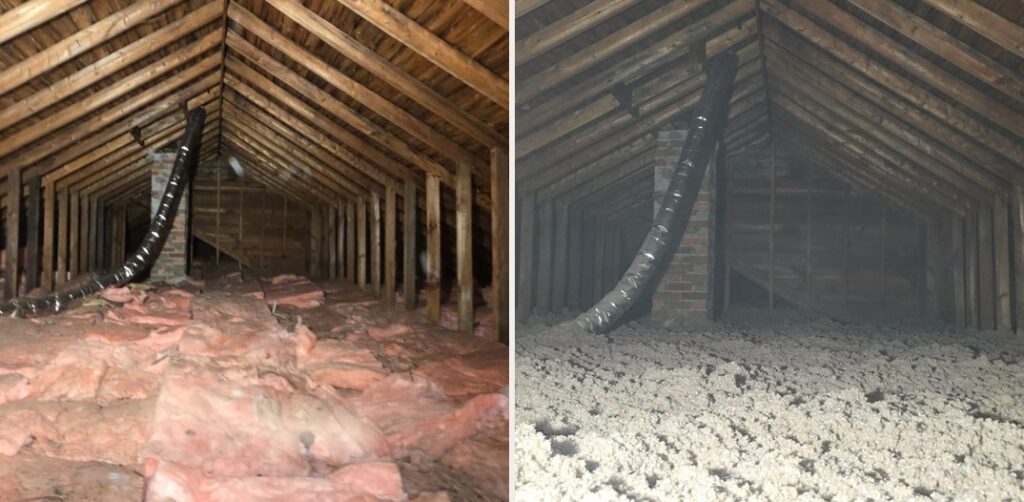
Choosing between blown-in and batt insulation for attics is an important decision for Ontario homeowners planning an insulation upgrade. Both materials can reduce heat transfer, but they differ in installation methods, coverage, suitability and long-term performance. The right option depends on the attic’s construction and existing conditions. At Celluloseman Inc., we provide professional attic insulation services for homeowners in Toronto, Mississauga, Burlington and surrounding Ontario communities.
Blown-in insulation often works well in attics with irregular framing and difficult-to-reach spaces. Batt insulation can be suitable for accessible areas with standard framing dimensions.
However, choosing insulation is only one part of an effective upgrade. Existing contamination, moisture, air leakage and ventilation problems must also be considered before installation begins.
What Is the Difference Between Blown-In and Batt Insulation?
The main difference between blown-in and batt insulation is how each material is installed.
Blown-in insulation consists of loose fibres distributed using specialized blowing equipment. Batt insulation comes in preformed sections that installers place between or across framing members.
Both materials can provide effective thermal resistance when installed correctly.
How Blown-In Attic Insulation Works
Blown-in insulation is installed using equipment that delivers loose insulation material through a hose into the attic.
Common materials include cellulose and loose-fill fibreglass.
The loose material settles around framing members, pipes and other obstacles, helping create consistent coverage across irregular surfaces.
Blown-in insulation is often considered for:
- Existing attic insulation upgrades
- Attics with complicated framing
- Spaces containing multiple obstructions
- Areas where consistent coverage is difficult with batts
- Projects requiring additional insulation above existing materials
The installation must achieve the specified coverage, installed density and settled depth to provide the intended thermal resistance.
How Batt Insulation Works in Attics
Batt insulation consists of manufactured sections, commonly made from fibreglass or mineral wool.
Installers position these sections between ceiling joists or in other suitable framing cavities.
Batts are available in different thicknesses, widths and thermal resistance ratings.
They can work well in accessible attics with regular framing dimensions.
However, installers must cut and fit the material carefully around obstacles. Gaps, compression and poorly fitted sections can reduce overall insulation performance.
Blown-In vs Batt Insulation for Attics at a Glance
Both insulation types have advantages, but their suitability depends on the installation conditions.
| Factor | Blown-In Insulation | Batt Insulation |
| Installation | Applied using blowing equipment | Placed manually in sections |
| Irregular attic spaces | Often easier to cover | Requires careful cutting |
| Standard framing cavities | Suitable | Often convenient |
| Coverage around obstacles | Conforms around many obstructions | Requires precise fitting |
| Adding insulation | Commonly used for attic top-ups | Possible where suitable |
| Installation quality | Depends on depth and distribution | Depends on fit and compression |
| Air sealing | Requires separate air sealing | Requires separate air sealing |
Neither material automatically produces a better result in every attic.
The installation method, existing insulation and condition of the building envelope influence overall performance.
Which Insulation Provides Better Attic Coverage?
Coverage is one of the main considerations when comparing blown-in and batt insulation.
An attic may have a suitable insulation R-value on paper but still perform poorly if gaps remain around framing and penetrations.
Blown-In Insulation for Irregular Attic Spaces
Many Ontario attics contain roof trusses, electrical wiring, plumbing penetrations and framing obstacles.
These features can make it difficult to fit insulation evenly.
Blown-in insulation can fill spaces around many obstructions without requiring individual pieces to be cut.
This makes it useful for complex attic floors where consistent coverage is the main concern.
However, installers must prevent loose material from blocking ventilation openings or covering equipment that requires clearance.
Batt Insulation for Open Framing Areas
Batt insulation can provide reliable coverage when framing spaces are accessible and regularly spaced.
Each section should fit snugly without being compressed.
If batts are too short, poorly cut or pushed tightly around obstacles, gaps may remain.
A second layer installed across the ceiling joists can also help reduce heat transfer through exposed framing.
The best approach depends on the available space and installation requirements.
How Does R-Value Compare Between Blown-In and Batt Insulation?
R-value measures resistance to heat flow. Higher R-values provide greater thermal resistance under the conditions used to rate the material.
Both blown-in and batt insulation are available in systems capable of achieving substantial attic R-values.
The important difference is how much material is required and whether the installation maintains effective coverage.
R-Value and Blown-In Insulation
The thermal resistance of blown-in insulation depends on the material, installed density and resulting depth.
Loose-fill cellulose and fibreglass have different product specifications.
Installers must follow manufacturer coverage charts, including the required number of bags, installed thickness and minimum settled depth.
R-Value and Batt Insulation
Batt insulation has a labelled R-value based on the product’s intended thickness.
Compressing a batt into a smaller space changes its thermal performance.
Likewise, leaving gaps between batts reduces the effectiveness of the insulated assembly.
For many conventional Ontario attics, homeowners may discuss upgrade targets around R-50 to R-60 with their insulation contractor. However, the appropriate level depends on the home, existing conditions and applicable building requirements.
The goal is to achieve the specified thermal resistance through a properly installed insulation system.
Can Blown-In Insulation Be Installed Over Existing Batts?
In some situations, blown-in insulation can be added over existing batt insulation.
This approach may improve coverage without requiring complete removal of suitable materials.
However, existing insulation should be inspected before additional material is installed.
When Adding Insulation May Be Appropriate
An insulation top-up may be suitable when existing batts are:
- Dry and free from known contamination
- In generally sound condition
- Properly positioned within framing spaces
- Not concealing unresolved moisture problems
- Compatible with the proposed insulation system
Air leakage and ventilation concerns should also be addressed before adding new material.
When Existing Insulation Should Be Removed
Insulation removal may be necessary when materials are severely damaged, contaminated or obstructing required remediation work.
Examples include moisture-damaged insulation, pest contamination and situations involving hazardous materials.
Adding blown-in insulation over these conditions may conceal existing problems rather than correct them.
A professional assessment helps determine whether retaining the existing material is appropriate.
Why Attic Insulation Removal Matters Before Installation
For some Ontario homes, choosing between blown-in and batt insulation should come after a more important decision: whether the existing insulation can safely remain.
Older attics may contain deteriorated materials, mould-related damage or insulation that requires specialized handling.
At Celluloseman Inc., insulation removal is a central part of our attic improvement services. We use specialized, high-powered vacuum removal equipment to support controlled removal and prepare attic spaces for further assessment and restoration.
Removing Damaged or Contaminated Insulation
Old insulation can conceal moisture staining, gaps around ceiling penetrations and other concerns.
Removing unsuitable materials allows our professionals to inspect accessible areas that may otherwise remain hidden.
Depending on the project, removal may also be necessary before air sealing, remediation or other corrective work.
The appropriate equipment and containment measures depend on the material and its condition.
Addressing Vermiculite and Asbestos Concerns
Some older Ontario homes contain vermiculite insulation.
Certain vermiculite products were contaminated with asbestos, creating a potential health risk when disturbed.
Homeowners should avoid sweeping, moving or using ordinary vacuum equipment on suspected vermiculite insulation.
Our team has experience with specialized vermiculite removal and related attic remediation work.
When asbestos-containing materials are suspected or identified, appropriate professional assessment and applicable Ontario asbestos regulations must guide the work.
Why Air Sealing Matters With Both Insulation Types
Neither blown-in nor batt insulation should be treated as a substitute for proper air sealing.
Insulation resists heat transfer, while air sealing helps reduce unwanted movement of indoor and outdoor air.
According to Natural Resources Canada’s guidance on roofs and attics, homeowners should address air leakage before adding attic insulation. The guidance also explains how loose-fill and batt insulation should be installed around framing and ventilation openings.
Common Attic Air Leakage Locations
Potential leakage points include:
- Attic access hatches
- Plumbing and electrical penetrations
- Openings around mechanical ducts
- Wall-to-ceiling connections
- Gaps around suitable service penetrations
These openings can allow warm, moisture-laden indoor air to enter colder attic areas.
Appropriate sealing methods depend on the materials and safety requirements around each opening.
Heat-producing equipment, chimneys and flues require special attention to fire-safe clearances.
How Ventilation Affects Attic Insulation Performance
Ventilation is another factor that homeowners should consider before comparing insulation materials.
In a conventional vented attic, soffit and other roof ventilation openings allow air to move through designated pathways.
Improper insulation placement can restrict these openings.
Preventing Blocked Soffit Vents
Blown-in insulation must be kept away from ventilation pathways using appropriate baffles or other specified measures.
Batt insulation must also be fitted without obstructing required airflow.
Our team reviews visible ventilation conditions and identifies problems that should be addressed before reinsulation.
Some roof assemblies use unvented designs, which require different insulation and moisture-control considerations.
Is Blown-In or Batt Insulation More Cost-Effective?
The cost of attic insulation depends on more than the material selected.
For some homes, blown-in insulation may offer an efficient way to cover a large, unobstructed attic floor. In other situations, batt insulation may be practical when framing spaces are easily accessible.
However, either option can involve additional preparation or installation requirements.
Factors That Affect Attic Insulation Costs
Important considerations include:
- Total attic floor area
- Existing insulation type and condition
- Required insulation R-value
- Attic access and working space
- Removal and disposal requirements
- Air sealing and ventilation work
- Necessary remediation or repairs
A lower installation quote does not necessarily represent better value if essential preparation is excluded.
Homeowners should compare written scopes that explain what work is included before deciding.
How We Approach a Complete Attic Insulation Upgrade
Choosing an insulation material is only one stage of a successful attic project.
At Celluloseman Inc., we focus on the condition of the entire attic before recommending installation.
Step 1: Assess Existing Insulation
We review accessible insulation, coverage and visible signs of moisture, contamination or deterioration.
This helps determine whether existing materials can remain or require removal.
Step 2: Complete Necessary Removal and Remediation
When unsuitable insulation must be removed, our team uses specialized removal equipment and work practices appropriate to the project.
Some attics require a combination of mould remediation, vermiculite removal or related corrective work.
This coordinated approach also supports general contractors and restoration companies managing larger projects.
Step 3: Address Air Leakage and Ventilation
After removal, we can assess accessible openings, ventilation restrictions and other conditions that may affect the new insulation.
Necessary corrective work should be completed before the attic is reinsulated.
Step 4: Install the Appropriate Insulation
We recommend an insulation approach based on the attic’s construction and condition.
Whether blown-in or batt insulation is appropriate, installation must provide consistent coverage and maintain required safety clearances.
The completed work is reviewed against the agreed project scope.
Choosing the Right Attic Insulation Contractor in Ontario
Homeowners should look beyond the insulation material when selecting a contractor.
A qualified contractor should explain the condition of the existing attic, identify necessary preparation and recommend suitable insulation options.
Important considerations include experience with older homes, specialized removal equipment, appropriate remediation qualifications and knowledge of air sealing and ventilation.
A clear scope of work should also identify any removal requirements, insulation specifications and applicable warranty terms.
Choose the Right Attic Insulation for Your Ontario Home
Blown-in and batt insulation can both provide effective attic insulation when selected and installed correctly. Blown-in insulation is often useful for irregular spaces and consistent coverage, while batts can work well in accessible framing cavities.
The best choice depends on the attic’s existing condition, required thermal resistance and installation needs.
At Celluloseman Inc., we help homeowners across Toronto, Mississauga, Burlington and surrounding Ontario communities with specialized insulation removal, attic restoration and professional reinsulation.
If you are comparing insulation options or concerned about existing attic materials, contact us to arrange an assessment and discuss the appropriate solution for your home.